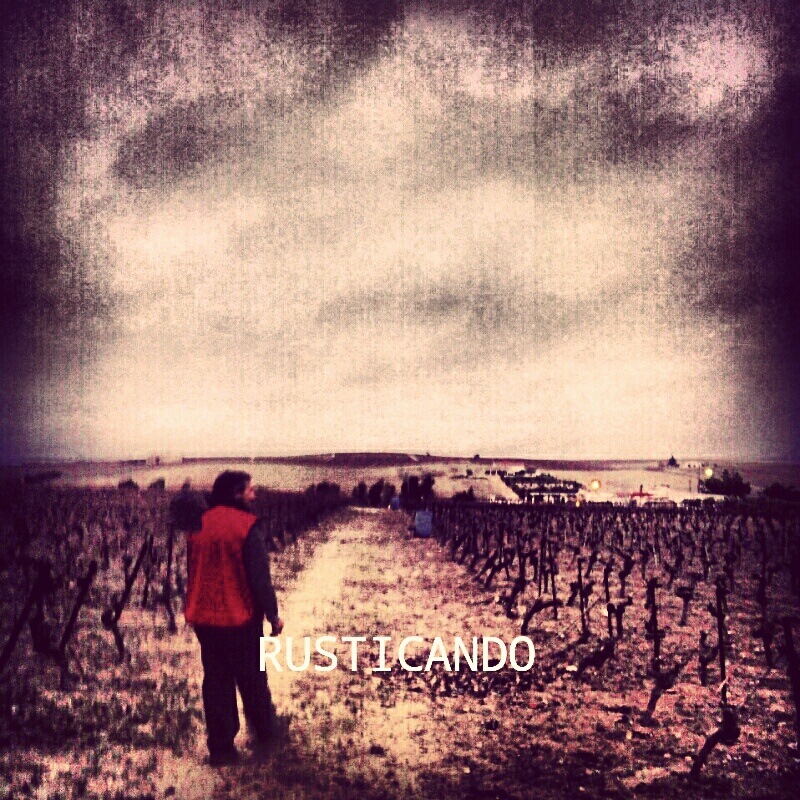
 Dice Curro que la tierra albariza es capaz de alumbrar en las noches más negras.
Curro says that the albariza soil is capable of illuminating even the darkest nights.
Dice Curro que la tierra albariza es capaz de alumbrar en las noches más negras.
Curro says that the albariza soil is capable of illuminating even the darkest nights.
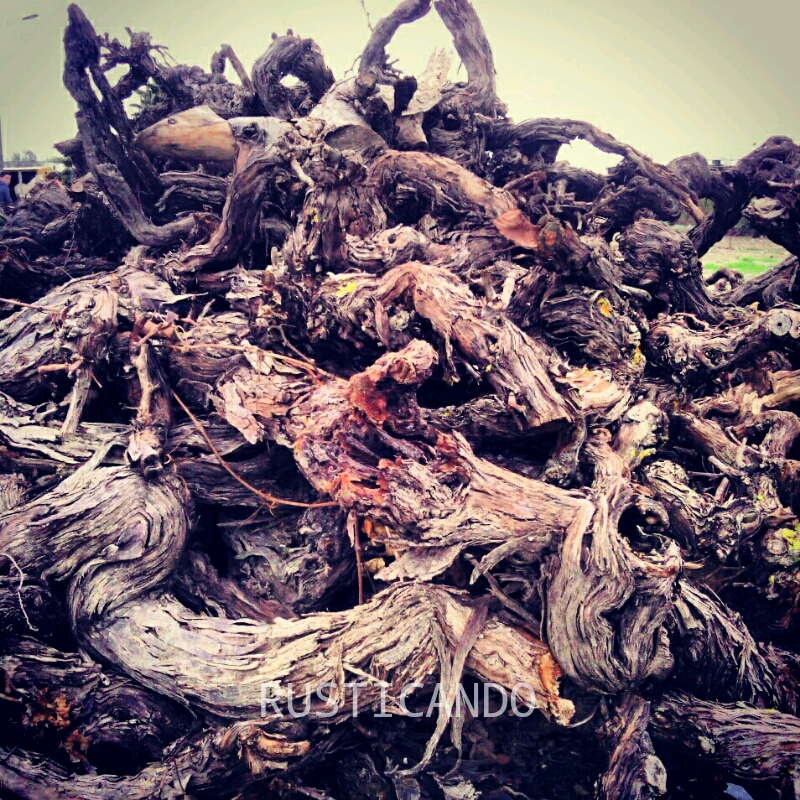 Dice Curro que esto se llama Camposanto de Cepas. En el Camposanto vemos los colores del Amontillado, de los Olorosos, del Dos Cortaos,… El dice que no es experto pero que los ve; nosotros lo contamos.
 Curro says that this is called the cemetery of vines. At the cemetery we can see the colors of the Amontillados, of the Olorosos, of the Dos Cortados, …He says that he’s not an expert but that he sees them; … we just tell the story.
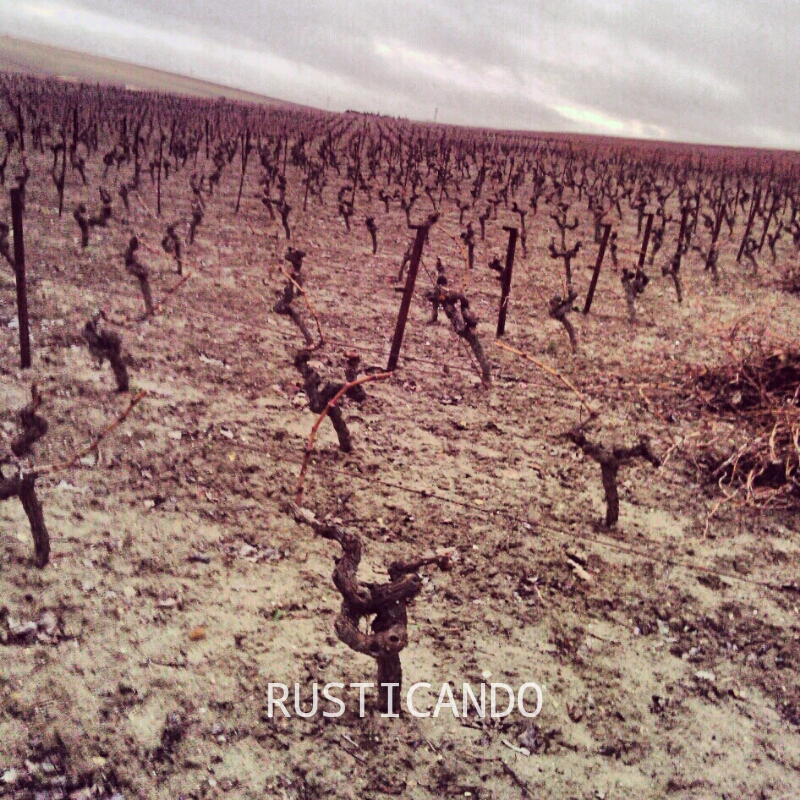

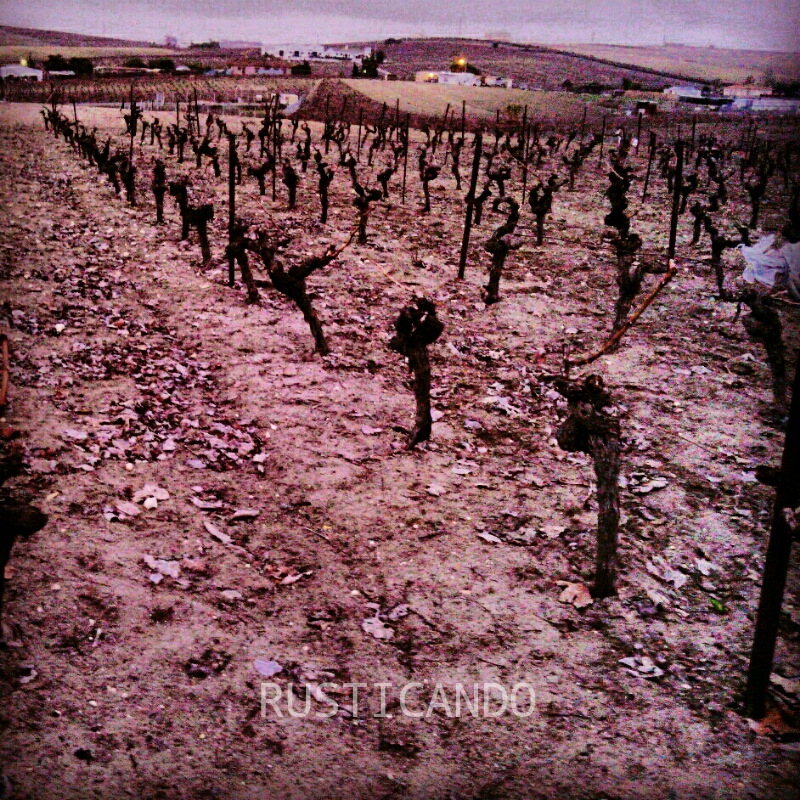
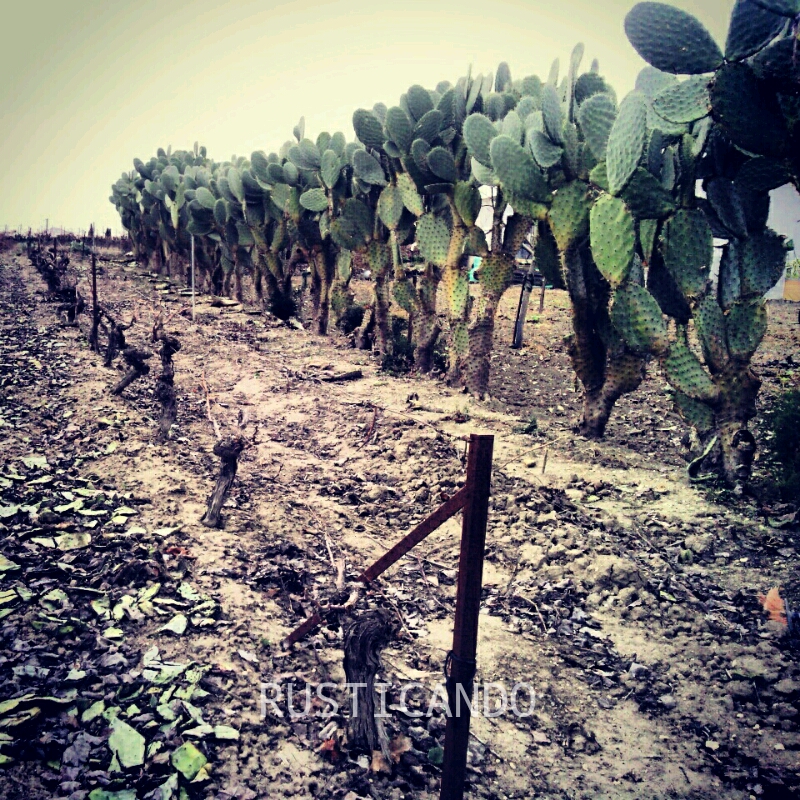 Sleeping vines.
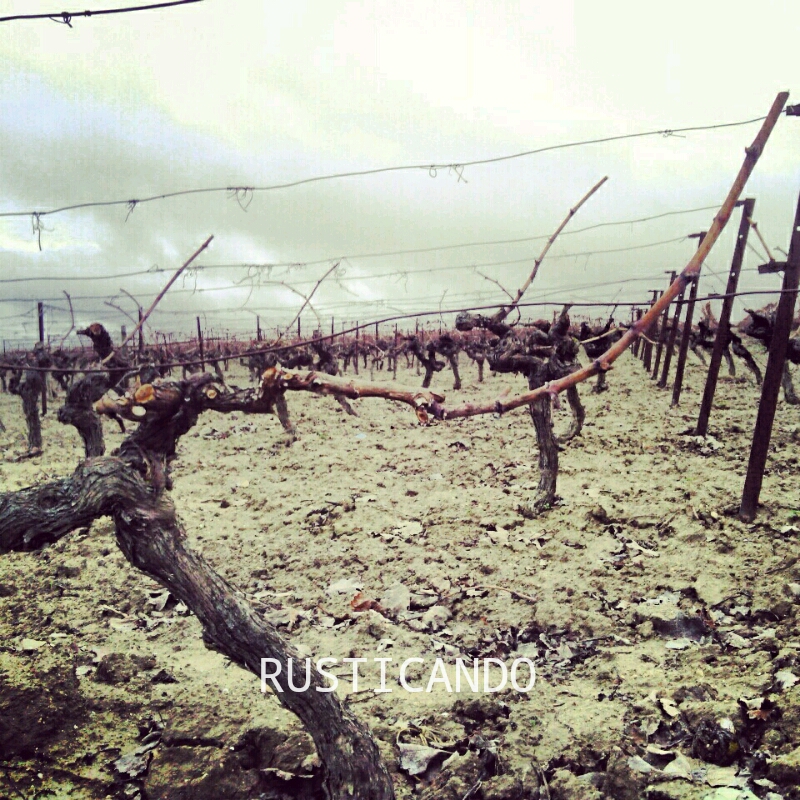 Cepa poá a moflete, porque dos años seguidos se dejó la vara de uva en el mismo sitio. Dice Curro que el poaó le ha dejado demasiadas yemas y algunas al llegar la primavera no brotaran y diremos que se quedaron dormidas. De los brazos no quiere hablar, no sabemos por qué.
A vine pruned Moflete style, because for two years in a row the grapevine stem was left in the same place. Curro says that the pruner has left too many buds on the stem and that some of them did not sprout in the Spring, so we will say that they remained asleep. He doesn’t want to talk about the branches, and we don’t know why.
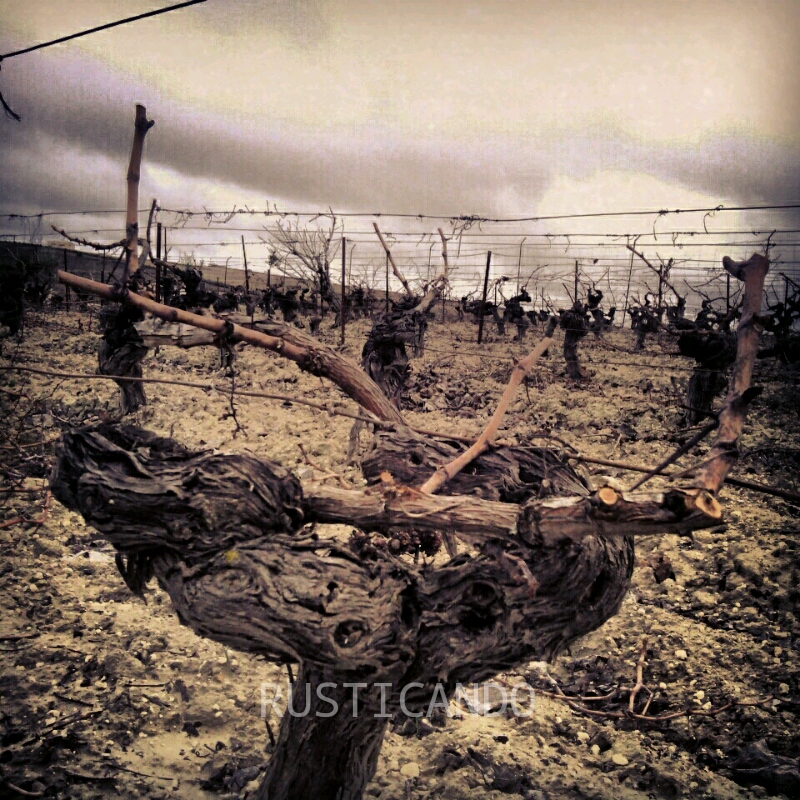 Una cepa con tres brazos. Dice Curro Carreja que chapodar es cortar los sarmientos sin ningún rigor ni regla establecida. Pero aquí, el poaor respeta la energía de la cepa dándole las yemas justas para que de sus vástagos broten los racimos que ella puede llevar al lagar. Este poaó seguro que es una persona justa.
A vine with three branches. Curro Carreja says that Chapodar is to cut the vine offshoots without any established rule or order. But here, the pruner respects the energy of the vine leaving it the exact number of buds so that its offshoots will only produce the bunches of grapes which will be taken to the winepress. This pruner is surely a just man.
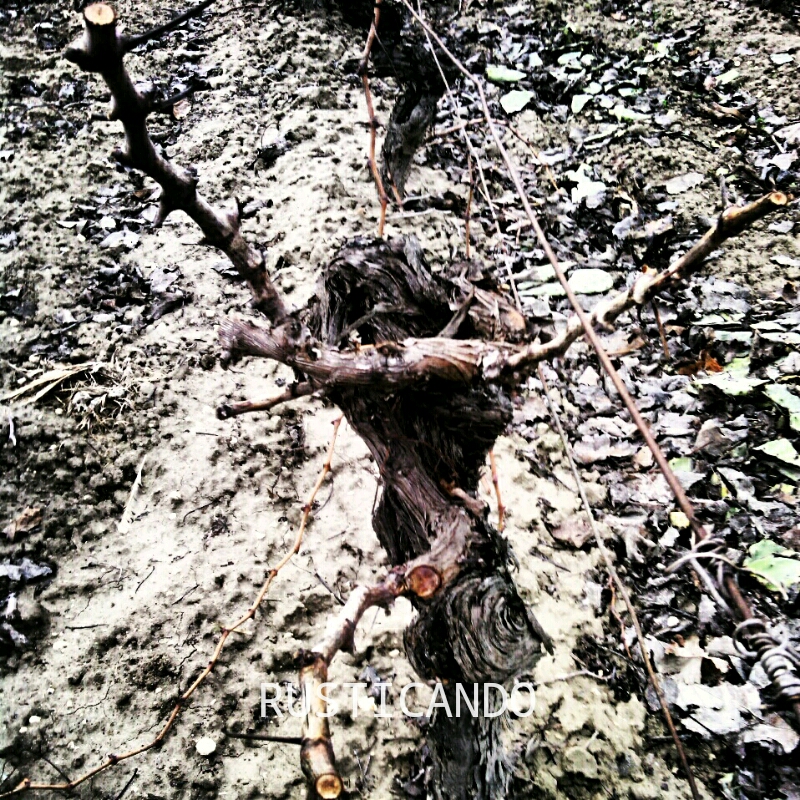 De esta cepa – que tiene tres verdes – dice Curro que está poá a moflote. Que si se quiere se puede volver a vara y pulgar. Que seguramente el poaó la vió débil para vara y pulgar.
From this vine –which has three shades of greens- Curro says that it is pruned Moflote style. If one wanted to, one could return to the vara y pulgar style of pruning. But, what the pruner probably saw was that the vine was too weak for vara y pulgar.
Pruned vine
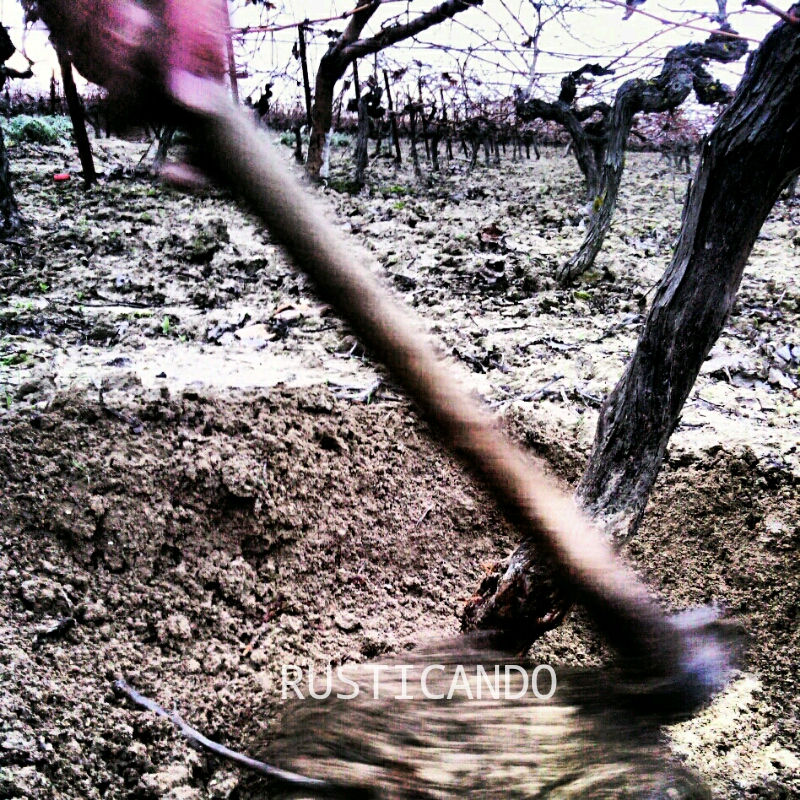 Cuenta Carreja que Desbragar, según el Diccionario de Morales, es hacer un hoyo alrededor de la cepa, de unos 20 ó 25 cm de profundidad, para eliminar raíces superficiales y chupones o para descubrir los injertos.
Carreja says that Desbragar, according to the Morales Dictionary, is to dig a trench around the vine about 20 or 25 cm deep in order to get rid of superficial roots or to expose grafts.
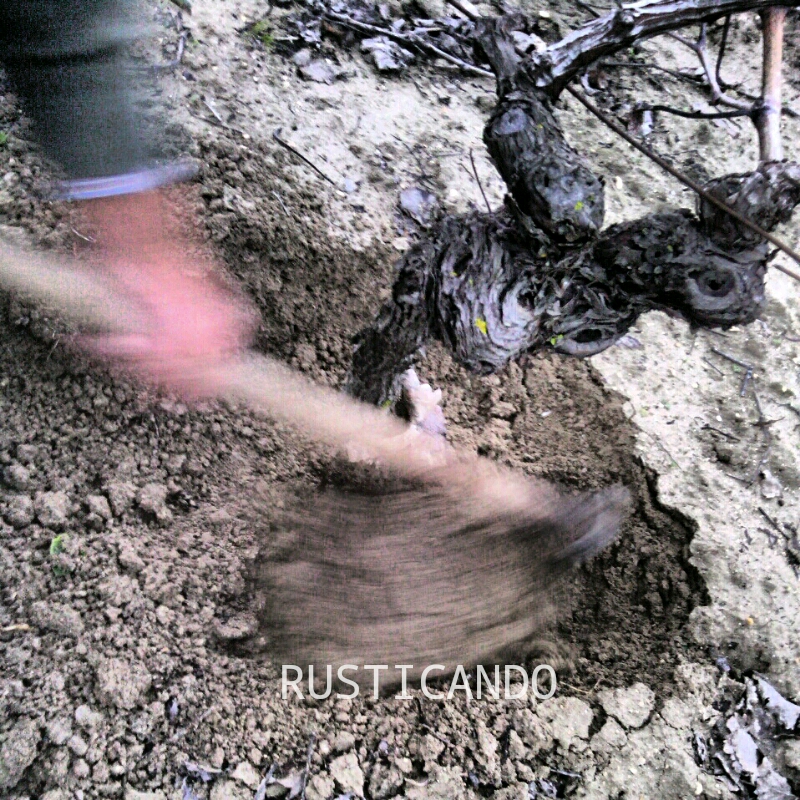 Los injertos – sostiene Carreja – se descubren para airear la humedad, para que le llegue el aire y el sol a la cepa. Dice que esta faena ya hace tiempo que no se hace, que el hombre no tiene tiempo. Así lo contamos.
The grafts – Carreja states – are unearthed to get rid of the moisture, and so that the air and the sun can get to the vine. He says that it has been a while since this procedure has been used, that man just doesn’t have much time any more. That´s the way we tell the story.
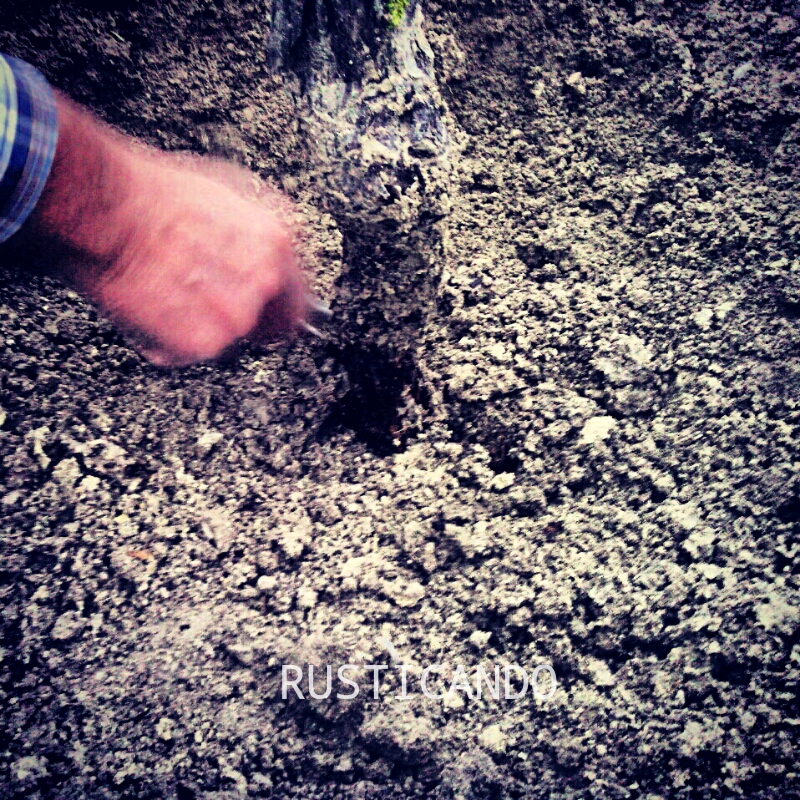
 Dice Curro que aquí podemos ver la planta americana: es la parte de color marrón. La parte más gruesa, de color gris, es el injerto. Lo hemos limpiado de raíces y le quitamos también los chupones, también llamados mamones, y dejamos descubierta la parte del injerto.
Curro says we can see the American rootstock here: it’s the brown-colored part. The thicker part, which is grey, is the graft. We have cleaned out the roots and we have also removed the superficial roots, which are also called Chupones, and we leave the area of the graft exposed.
Según Morales, también se llaman Chupones a las personas que siempre andan alrededor de los demás esperando sacar algún provecho.
According to Morales, Chupones are also people that are always hanging around others and trying to get something from them.
 RUSTICANDO
